
Access to an IDP camp
Negotiate entry to a displacement site with the gatekeeper who decides the terms of every visit.
Humanitarian Dialogue Lab
KROSS is a rehearsal space for difficult humanitarian conversations. Practise the negotiation before it happens with an AI counterpart that listens to what you actually say.
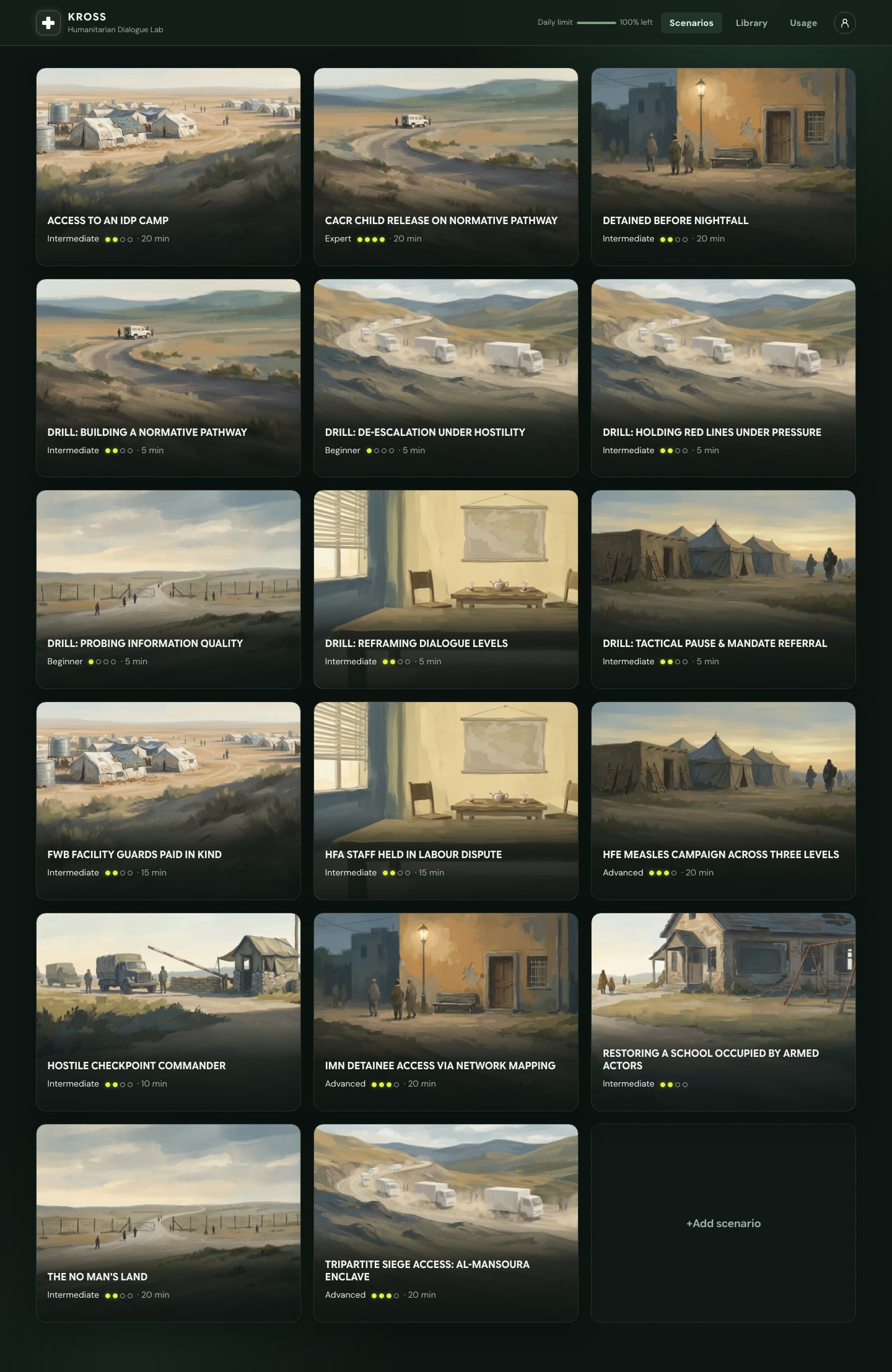
Scenarios
Every scenario is a place, a counterpart, and a set of stakes you can feel. Pick one, read the brief, decide what good would look like, then step in. When the real conversation comes, you have been here before.
Scenario design is CCHN-inspired, adapted from frontline humanitarian negotiation field practice. KROSS is independent and is not affiliated with or endorsed by the CCHN.
Negotiate entry to a displacement site with the gatekeeper who decides the terms of every visit.
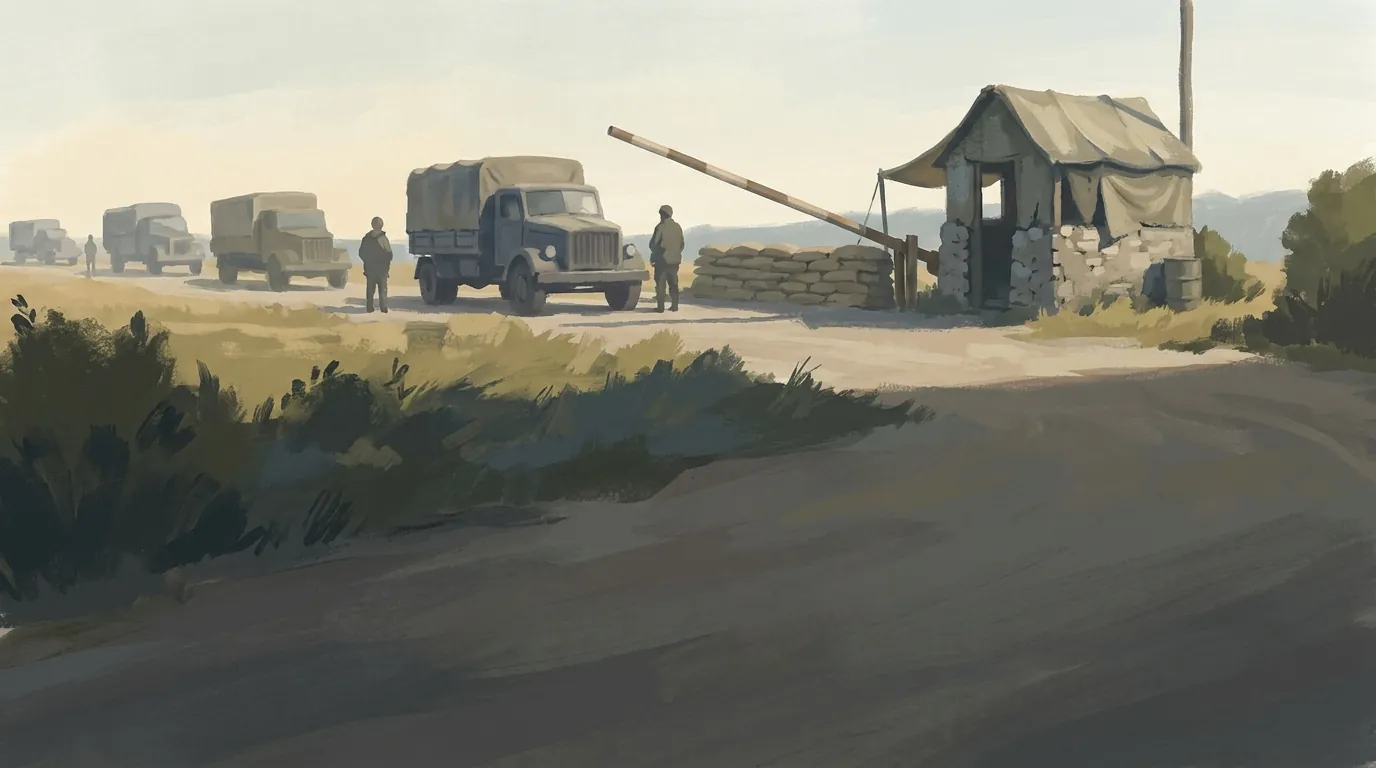
Talk your convoy past a commander who is sure you are carrying something you should not be.
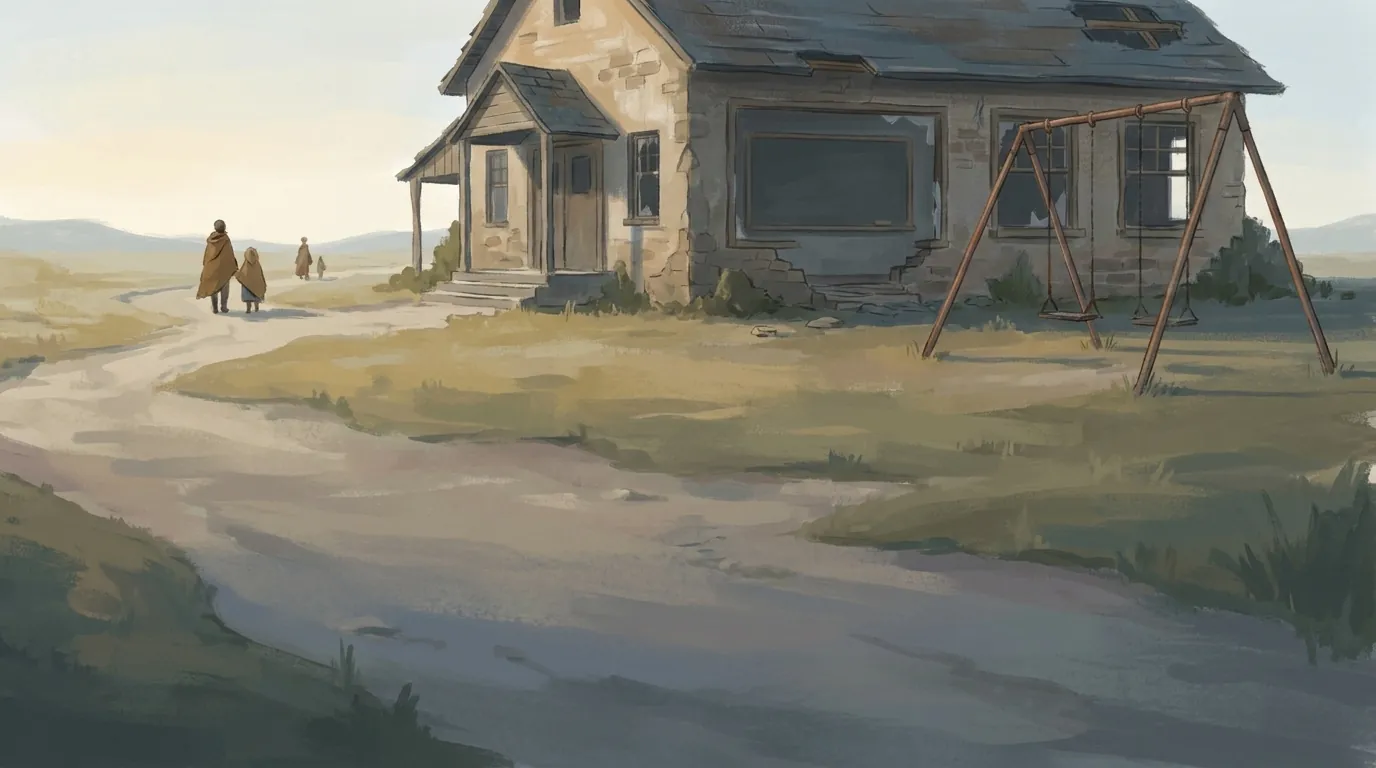
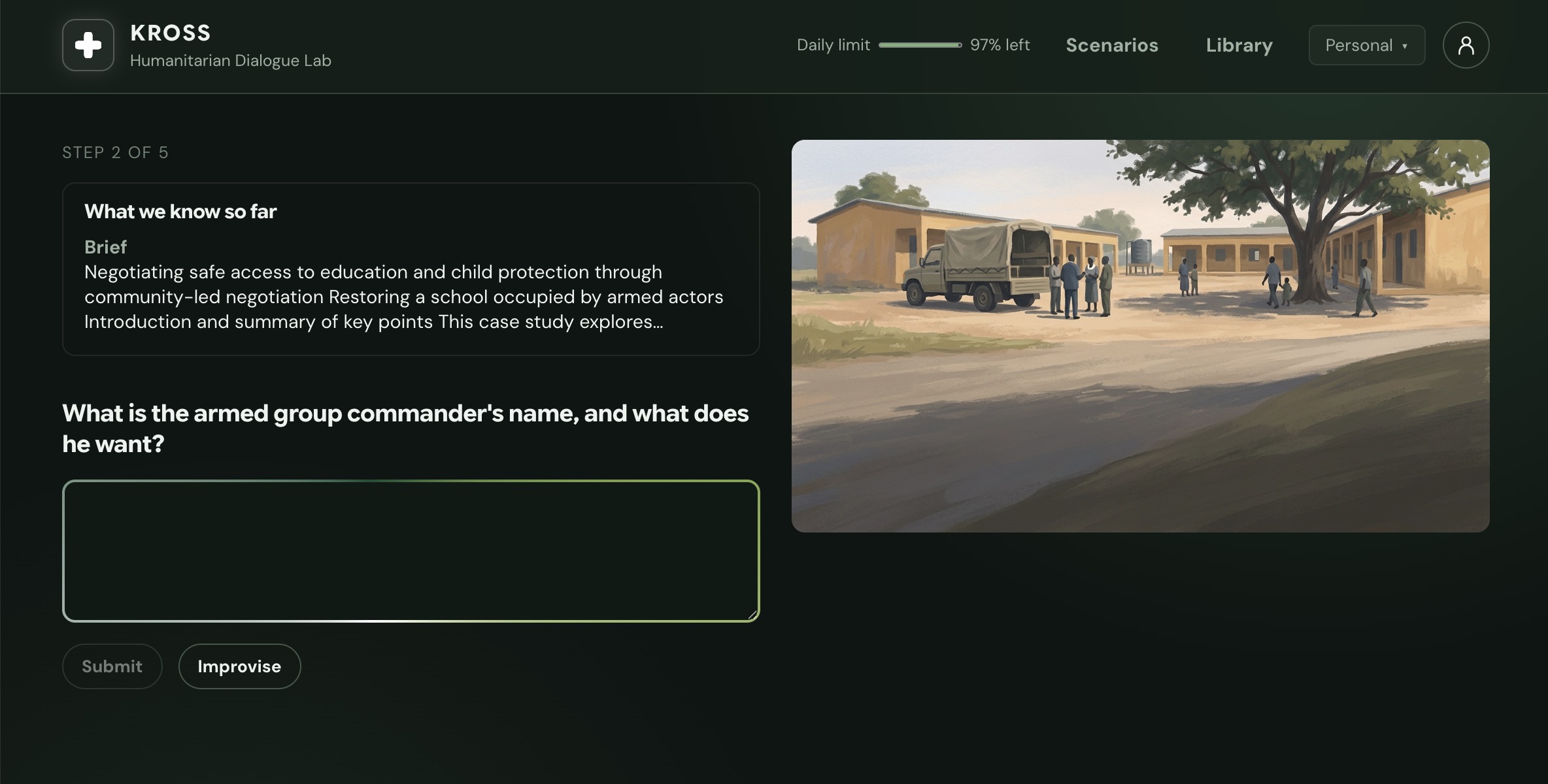
Persuade armed actors to leave a school so classes can restart without turning the standoff into a fight.
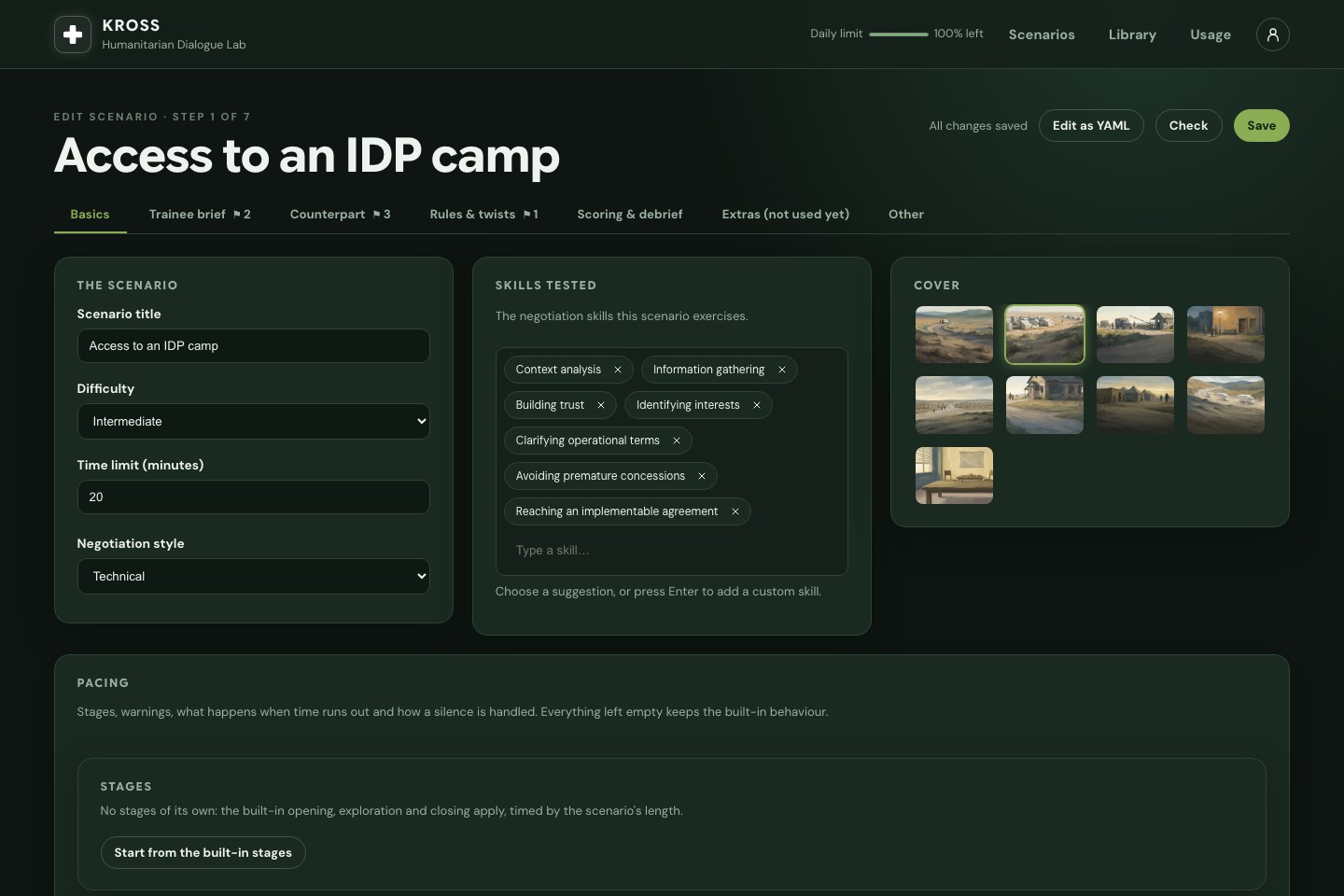
Scenario builder
Describe the situation the way you would brief a colleague before a hard meeting. The builder turns that brief into a scenario, showing its work as it builds.
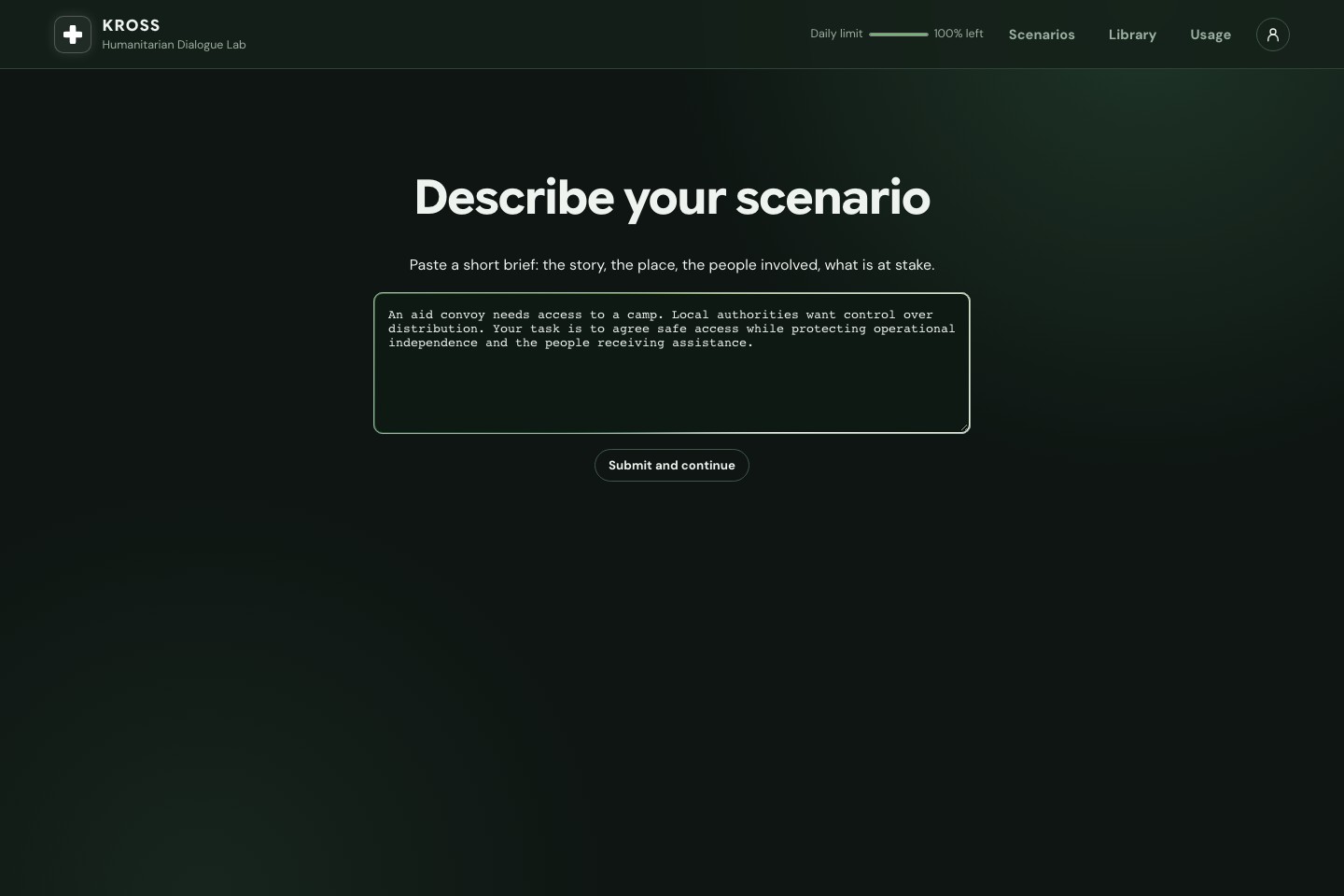
Trainer mode
Trainers sit in on a run and see how the conversation is moving. When the moment is right, they steer it: queue a twist, or turn the dials that shape the counterpart. Every intervention is written to the run log, so the session can be explained afterwards.
Follow the live exchange as it happens in real time.
Inject a twist mid-scenario: a rumor, a new order, or a gate that suddenly closes.
Adjust trust, rigidity, and hostility while the run is still going.
A rumor reaches the camp committee before your meeting starts.
Engine behind
KROSS is not a dialogue tree. The engine reads what you say, plays the other side, and lets clear rules decide where the conversation lands.
Step 1
In your own words. No multiple choice, no scripted prompts to click through.
Step 2
Your words are classified, and trust, rigidity, and hostility update before the counterpart answers.
Step 3
The AI responds from the updated state, playing their role, constraints, and reactions faithfully.
Step 4
Each change is written down as it happens, so the debrief can explain every turn.
Debrief
When the run ends, the debrief turns the session into something you can act on: how the skills showed up, the moments worth keeping, what to try instead, and one focus for next time.
“You said the team would stay outside the fence. Now they are asking for the keys.” Counterpart · mid-run
“Ask me that again after you have spoken to my deputy.” Counterpart · closing
Next time, ask what the commander needs to show his people before he lets the convoy through, then trade from there.
Found
Missed
“Why did trust drop after my second question?”
The Coach answers from your own run: the turns you took, the rules that moved, and the log behind them.
Choose a scenario, test your approach under real pressure, and get evidence-based feedback on every turn.